
Important Medical Disclaimer
We are not doctors or medical professionals. The information in this article represents our research, personal experience, and opinions based on available studies and clinical data.
Never start, stop, or modify any medication without consulting your healthcare provider. GLP-1 and GIP agonists are prescription medications with potential side effects and contraindications.
This content is for educational purposes only and should not replace professional medical advice, diagnosis, or treatment.
This is the question I get asked most often these days.
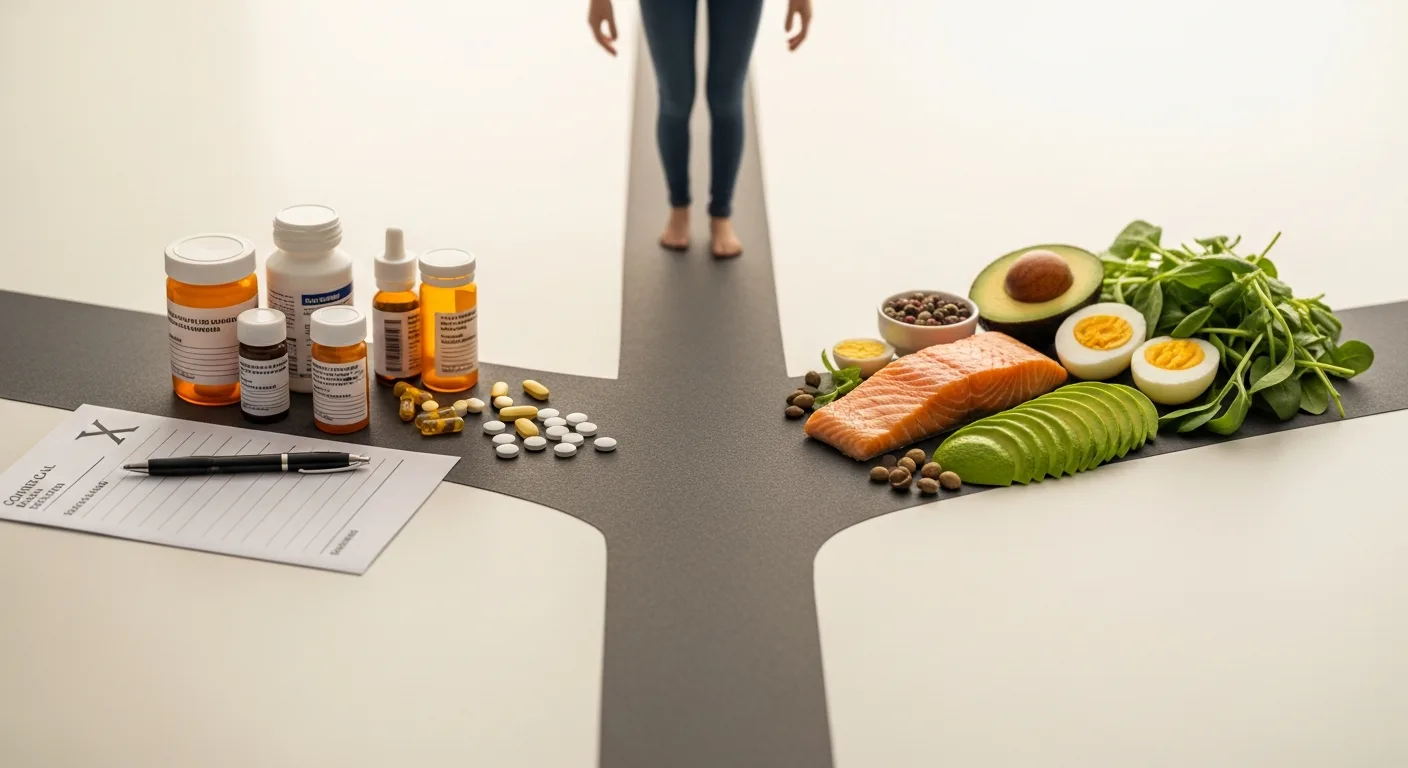
Someone’s been reading about incretin medications - the GLP-1 and dual agonist treatments that have transformed weight management. They’ve seen the dramatic before-and-after photos. They’ve heard about the “food noise” finally going quiet. But they’ve also done keto before, or they’re interested in trying it. And now they’re stuck.
Should they give keto a real shot first? Or just go straight to medication and not waste time?
Before diving into this decision framework, you may want to understand how incretin hormones actually work and the science behind medication-assisted weight loss.
There’s no universal right answer. But there is a framework that can help you decide based on your situation - not someone else’s social media success story.
Why the Order Actually Matters
This isn’t just a philosophical question. The order you choose has real implications:
If you start with keto:
- You learn to eat differently before adding medication complexity
- You discover how your body responds to carb restriction
- You build habits that can last after any intervention
- You might not need medication at all
If you start with GLP-1s:
- You get rapid appetite suppression that makes dietary changes easier
- You may see faster initial results
- You’re investing $1,000+/month (without insurance) in an ongoing medication
- You’ll eventually need an exit strategy when you want to stop
Neither path is wrong. But they lead to different places.
The Case for Trying Keto First
Let me make the argument for starting with keto before considering medication.
Cost: $0 vs $13,000/Year
This is the elephant in the room. Incretin medications are expensive. Without insurance coverage, you’re looking at roughly $1,000 per month for GLP-1 or dual agonist treatments. That’s $12,000-$13,000 per year.
Keto costs nothing beyond your normal grocery bill. In fact, some people spend less because they stop buying processed snacks, sugary drinks, and fast food.
A recent study compared ketogenic diet therapy to GLP-1 medications and found that keto patients:
- Lost an average of 43 pounds over one year
- Saved an average of $1,700 per patient compared to medication users
- Achieved comparable weight loss without pharmaceutical intervention
If money is any factor in your decision, trying keto first makes financial sense.
Building Sustainable Habits
Here’s something that doesn’t get discussed enough: GLP-1 medications don’t teach you how to eat differently. They just make you less hungry.
When the medication suppresses your appetite, eating less is relatively easy. But what happens when you stop? Studies show most people regain significant weight within a year of discontinuing GLP-1s. The medication didn’t build the habits needed for long-term maintenance.
Keto, on the other hand, requires you to fundamentally change how you eat. You learn which foods work for your body. You develop meal prep skills. You figure out how to handle restaurants, social situations, and cravings without pharmaceutical backup.
These skills transfer to life after any diet. The lessons learned on keto stay with you.
Natural Appetite Suppression
One of the main benefits of GLP-1s is appetite reduction. But here’s the thing - keto does this too, just through a different mechanism.
When you’re in ketosis:
- Ketone bodies naturally suppress hunger hormones
- Stable blood sugar eliminates energy crashes that drive cravings
- High fat and protein intake keeps you satisfied longer
- The “food noise” quiets down for many people
It’s not as immediate or dramatic as medication, but it’s real. Many people on keto find they naturally eat less without trying because they simply aren’t hungry.
If you’ve never experienced ketosis, you don’t know if you’re one of those people. Trying keto first lets you find out.
No Side Effects to Manage
GLP-1 medications come with common side effects:
- Nausea and vomiting
- Diarrhea or constipation
- Bloating and gas
- Potential rare serious effects (pancreatitis, gastroparesis)
Keto has an adjustment period too - the infamous “keto flu” - but it’s temporary and manageable with proper electrolyte supplementation. Once you’re fat-adapted, most people feel better than they did before.
The Keto-First Argument
Try keto first if:
- Cost is a factor - You want to try a $0 approach before committing to $1,000+/month
- You want sustainable habits - You’re willing to invest time in learning new eating patterns
- You’ve never experienced ketosis - You don’t know how your body responds
- You have no urgent health conditions - You can take time to experiment
The Case for Starting with GLP-1 First
Now let me make the opposite argument. There are legitimate reasons to start with medication.
Medical Necessity
If you have type 2 diabetes, GLP-1 medications aren’t just about weight loss - they’re treating a medical condition. These drugs improve blood sugar control, may protect cardiovascular health, and can allow reduction of other diabetes medications.
For some people, the health benefits of GLP-1s go beyond weight loss. If your doctor is recommending medication for medical reasons, that’s different from purely elective weight loss.
The Willpower Gap
Let’s be honest about something: sustainable dietary change is hard. Really hard.
If you’ve tried and failed at keto (or other diets) multiple times, there’s no shame in admitting that willpower alone isn’t working. GLP-1 medications can provide a bridge - reducing the constant fight against hunger while you establish new patterns.
Some people use GLP-1s as “training wheels.” The medication handles appetite suppression while they focus on changing what they eat and building exercise habits. Then they can transition off medication with these new patterns in place.
Speed of Results
When weight is causing immediate health problems, faster results matter. GLP-1 medications typically produce consistent, predictable weight loss from the start.
Keto works, but results are more variable. Some people lose weight quickly; others plateau. Some adapt easily to ketosis; others struggle. If you need reliable results on a timeline (perhaps before a surgery or to address an urgent health condition), medication offers more predictability.
Insurance Coverage
Here’s a practical consideration: if your insurance covers GLP-1 medications, the cost argument shifts significantly. Many plans now cover these medications, especially for patients with diabetes or weight-related conditions.
If medication costs you $25/month with insurance while keto requires expensive specialty groceries in your area, the math changes.
The GLP-1 First Argument
Start with GLP-1s if:
- You have diabetes or medical conditions that require medication
- Previous diet attempts have repeatedly failed and you need additional support
- You need predictable, fast results for health reasons
- Insurance covers it and cost isn’t a barrier
- You have a clear exit strategy for when you want to stop
The Decision Framework: 5 Questions to Ask Yourself
Rather than giving you a definitive answer, here are five questions that will help you decide:
1. Do You Have Type 2 Diabetes or Serious Weight-Related Health Conditions?
If yes, talk to your doctor about whether GLP-1 medication is medically indicated. These drugs have benefits beyond weight loss for certain conditions.
If no, you have more flexibility to try keto first as a dietary approach.
2. What’s Your Budget Situation?
Be honest about finances:
- Can’t afford $1,000+/month: Try keto first
- Insurance covers GLP-1s: Medication becomes more viable
- Mixed situation: Factor cost into the overall decision, but don’t let it be the only factor
3. Have You Ever Successfully Followed Any Diet for 30+ Days?
This tells you something about your current capacity for dietary change:
- Yes, I’ve done this before: You might succeed with keto alone
- No, I’ve never made it that long: You might benefit from medication support initially
4. How Urgent Is Your Weight Loss Timeline?
- No urgency, willing to experiment: Try keto first
- Need results within 3-6 months: GLP-1s offer more predictable timeline
- Preparing for surgery or addressing acute condition: Talk to your doctor about the fastest safe approach
5. What’s Your Long-Term Maintenance Plan?
This is the question most people forget to ask:
- Want to maintain without medication: Keto teaches the skills you’ll need
- Willing to stay on GLP-1s long-term: Medication can work indefinitely
- Want to use medication temporarily: Plan your transition strategy before starting

The Hybrid Path: How to Do Both Strategically
There’s a third option that combines both approaches. Here’s how it works:
Phase 1: Start with GLP-1 Medication
Use the first 2-3 months on medication to:
- Get appetite under control
- Break old eating patterns
- Start building exercise habits
- Learn about keto without implementing it yet
Phase 2: Gradually Transition to Keto While on Medication
Around months 3-4, start reducing carbs while still on your GLP-1:
- Week 1-2: Drop to 100g carbs/day
- Week 3-4: Drop to 50g carbs/day
- Month 2: Enter ketosis at under 30g carbs/day
The medication makes this transition easier because your appetite is already suppressed.
Phase 3: Use Keto as Your Exit Strategy
Once you’re established in keto:
- Work with your doctor to taper the GLP-1 dose
- Keto’s natural appetite suppression takes over
- You maintain results without ongoing medication costs
This approach gives you the rapid start of medication plus the sustainable habits of keto. We cover this in detail in our GLP-1 exit strategy guide.
Quick Tip
The hybrid path works best when you plan it from the start. If you begin GLP-1s without an exit strategy, you may find yourself dependent on medication longer than intended. Decide before you start how you eventually want to maintain your results.
What I’d Tell a Friend (Honest Take)
If a friend asked me what they should do, here’s what I’d say:
If you’ve never given keto a real try - meaning at least 4-6 weeks of strict adherence - I’d suggest starting there. You might be surprised by how your body responds. The financial investment is zero, and the skills you build are permanent.
If you’ve genuinely tried keto multiple times and can’t stick with it, there’s no shame in exploring medication. Sometimes you need external support to break patterns that willpower alone can’t crack.
If you have diabetes or weight-related health conditions, talk to your doctor. They may recommend medication for medical reasons beyond simple weight loss.
If you do start with medication, don’t just coast on reduced appetite. Use that window to actively build new eating habits. Think of the medication as temporary support, not a permanent solution.
And regardless of which path you choose, remember: this isn’t an either/or forever decision. You can always try one approach, evaluate the results, and adjust. Many people end up using both at different stages of their journey.
Making Your Decision
Take out a piece of paper (or open a notes app) and answer these questions:
- Is there a medical reason I need to consider medication? (Diabetes, serious weight-related condition)
- What’s my realistic budget for weight loss interventions?
- What’s my track record with dietary changes?
- How urgently do I need results?
- What’s my plan for maintaining results long-term?
Your answers will point toward the path that makes sense for your specific situation.
If you’re leaning toward keto, start with our complete beginner’s guide to understand exactly what you’re getting into. If you’re leaning toward GLP-1s, make sure to read about the tradeoffs involved so you’re going in with eyes open.
And if you’re still unsure, that’s okay too. Sometimes the right next step is simply gathering more information until the path becomes clear.
Whatever you choose, you’re taking action toward better health. That’s what matters most.
GLP-1 + Keto Series
This article is part of our comprehensive series on combining GLP-1 medications with the ketogenic diet:
- How Incretin Hormones Control Hunger
- The Science of Medication-Assisted Weight Loss
- GLP-1 and Keto: Can They Work Together?
- Keto First or GLP-1 First? A Decision Framework (You are here)
- The Tradeoffs: What You Gain and Lose
- Combining GLP-1 and Keto: A Practical Protocol
- Using Keto as Your GLP-1 Exit Strategy
- 30-Day GLP-1 + Keto Quick Start
- GLP-1 vs GIP: Understanding the Science