

Important Medical Disclaimer
We are not doctors or medical professionals. The information in this article represents our research, personal experience, and opinions based on available studies and clinical data.
Never start, stop, or modify any medication without consulting your healthcare provider. GLP-1 and GIP agonists are prescription medications with potential side effects and contraindications.
This content is for educational purposes only and should not replace professional medical advice, diagnosis, or treatment.
I was three weeks into my incretin medication when I started wondering if I could still do keto.
The medication was working - my appetite had finally quieted down after years of constant food noise. But I’d done keto before and loved how I felt. Stable energy. No 3pm crashes. That mental clarity everyone talks about. Could I have both? Or would combining them be some kind of metabolic disaster?
If you’re on a GLP-1 agonist, dual GLP-1/GIP agonist, or any other incretin-based medication and you’re wondering the same thing, I’ve got good news and complicated news.
The Short Answer
Yes, you can combine GLP-1 medications with a ketogenic diet. Many people do it successfully. But - and this is important - you need to do it thoughtfully, with medical supervision, and you absolutely cannot start both at the same time.
Here’s why this combination is even worth considering: both approaches attack the same problem from different angles. GLP-1s reduce your appetite and slow down digestion. Keto shifts your body to burn fat for fuel instead of carbs. Together, they can be surprisingly complementary.
But they can also amplify each other’s downsides if you’re not careful.
The Compatibility Bottom Line
GLP-1 medications and keto can work together because:
- Both reduce appetite through different mechanisms
- Both improve blood sugar control and insulin sensitivity
- Both target fat loss (keto through ketosis, GLP-1s through calorie reduction)
The key is sequencing them properly and prioritizing protein intake.
How GLP-1s and Keto Work Differently
To understand why these two approaches can complement each other, you need to know what each one actually does.
What Incretin Medications Do
There are two main types of incretin agonists on the market:
GLP-1 agonists (like semaglutide) mimic the GLP-1 hormone your body naturally produces. To understand how these hormones work, see our deep dive on incretin hormones.
Dual GIP/GLP-1 agonists (like tirzepatide) mimic both GLP-1 and GIP hormones, which may explain their stronger effects in clinical trials. For more on why targeting both receptors matters, see our GLP-1 vs GIP explainer.
Both types:
- Slow gastric emptying - food stays in your stomach longer, so you feel full faster
- Reduce appetite signals - the “food noise” in your brain gets quieter
- Improve insulin sensitivity - your body handles blood sugar more efficiently
- May reduce cravings - especially for high-calorie, high-carb foods
The result: you eat less without feeling deprived. For many people, it’s the first time in years they haven’t thought about food constantly.
What Keto Does
The ketogenic diet takes a completely different approach. By cutting carbs to under 20-50 grams per day, you:
- Shift your fuel source from glucose to ketones (produced from fat)
- Stabilize blood sugar naturally - no carbs means no blood sugar spikes
- Reduce hunger hormones - ketosis naturally suppresses appetite
- Increase fat burning - your body becomes efficient at using fat for energy
If you need a refresher on the basics, our complete beginner’s guide to keto covers everything.

The Surprising Ways They Complement Each Other
Here’s what makes this combination interesting: GLP-1s and keto target appetite through completely different pathways. One is pharmaceutical, one is metabolic. When you stack them, the effects can be synergistic.
Double Appetite Suppression
GLP-1s reduce appetite by slowing digestion and signaling fullness to your brain. Keto reduces appetite by stabilizing blood sugar and producing ketones (which naturally suppress hunger). Together, many people find their relationship with food fundamentally changes.
That constant background hum of “what should I eat next?” can finally go quiet.
Enhanced Blood Sugar Control
If you have insulin resistance or type 2 diabetes, this combination is particularly powerful. GLP-1s improve how your body responds to insulin. Keto reduces the amount of glucose entering your system in the first place. The result is often remarkably stable blood sugar throughout the day.
Better Fat Burning
GLP-1s help you eat less. Keto helps your body become better at burning fat for fuel. When you’re eating fewer calories AND your body is primed to burn fat, the results can be significant.
What the Research Shows
A recent study found that patients following a ketogenic diet achieved weight loss comparable to those on GLP-1 medications - an average of 43 pounds over one year. The keto group also saved an average of $1,700 per patient in medication costs.
This doesn’t mean one is “better” than the other. It suggests that combining both approaches thoughtfully could offer advantages neither provides alone.
Real Risks You Need to Know About
Now for the complicated part. Combining GLP-1s with keto isn’t without risks. Here’s what you need to watch for:
Amplified GI Side Effects
Both GLP-1 medications and the keto transition can cause gastrointestinal issues. GLP-1s commonly cause nausea, bloating, and constipation. Keto’s high-fat emphasis can make these worse, especially early on.

The solution isn’t to avoid fat - you need it on keto - but to introduce it gradually and choose easier-to-digest options. Many people find that starting with moderate fat intake and increasing over time works better than diving straight into butter-drenched everything.
Nutritional Deficiency Risk
This is the risk that concerns healthcare providers most. GLP-1s significantly reduce how much you eat. Keto restricts entire food groups. Combine both, and you’re at real risk of not getting enough nutrients.
The biggest concern is protein. When you’re barely hungry and cutting carbs, it’s easy to under-eat protein without realizing it. This matters because inadequate protein leads to muscle loss - which we’ll talk about in a moment.
Hypoglycemia (Low Blood Sugar)
If you have diabetes and take other blood sugar medications alongside your GLP-1, adding keto creates a triple-threat against your blood sugar. This can push levels dangerously low.
Anyone with diabetes needs to work closely with their doctor when considering this combination. Medication adjustments are almost always necessary.
The Muscle Loss Problem
Here’s something that doesn’t get talked about enough: studies show that 30-40% of weight lost on GLP-1 medications can be lean muscle mass, not just fat.
Muscle loss matters because:
- It lowers your metabolism (making future weight regain easier)
- It reduces strength and physical function
- It can make you feel weak and fatigued
The good news? Adequate protein intake and resistance training can largely prevent this. And keto, done properly with enough protein, may actually be protective against muscle loss compared to other dietary approaches.
The Protein Priority
If you combine GLP-1s with keto, protein isn’t optional - it’s the most important thing you track.
Target: 1.2 to 1.6 grams of protein per kilogram of body weight daily
For a 150-pound person, that’s roughly 82-109 grams of protein per day.
Eat protein first at every meal. Your appetite is suppressed, so prioritize the macronutrient you can’t afford to skip.
Who Should (and Shouldn’t) Combine Them
This combination isn’t right for everyone. Here’s who might benefit and who should probably choose one or the other.
Good Candidates for Combining
- People already stable on GLP-1s who want to optimize their diet
- Those with insulin resistance or type 2 diabetes (with medical supervision)
- People who’ve done keto before and understand how their body responds
- Anyone prioritizing fat loss while preserving muscle (with adequate protein)
- Those planning to eventually stop GLP-1s and want an exit strategy
Who Should Probably Choose One or the Other
- People just starting GLP-1 medication - get stable first
- Anyone with severe GI side effects on their current medication
- People with history of eating disorders - the double restriction can be triggering
- Type 1 diabetics - different considerations apply
- Anyone who can’t commit to tracking protein intake - too risky without it
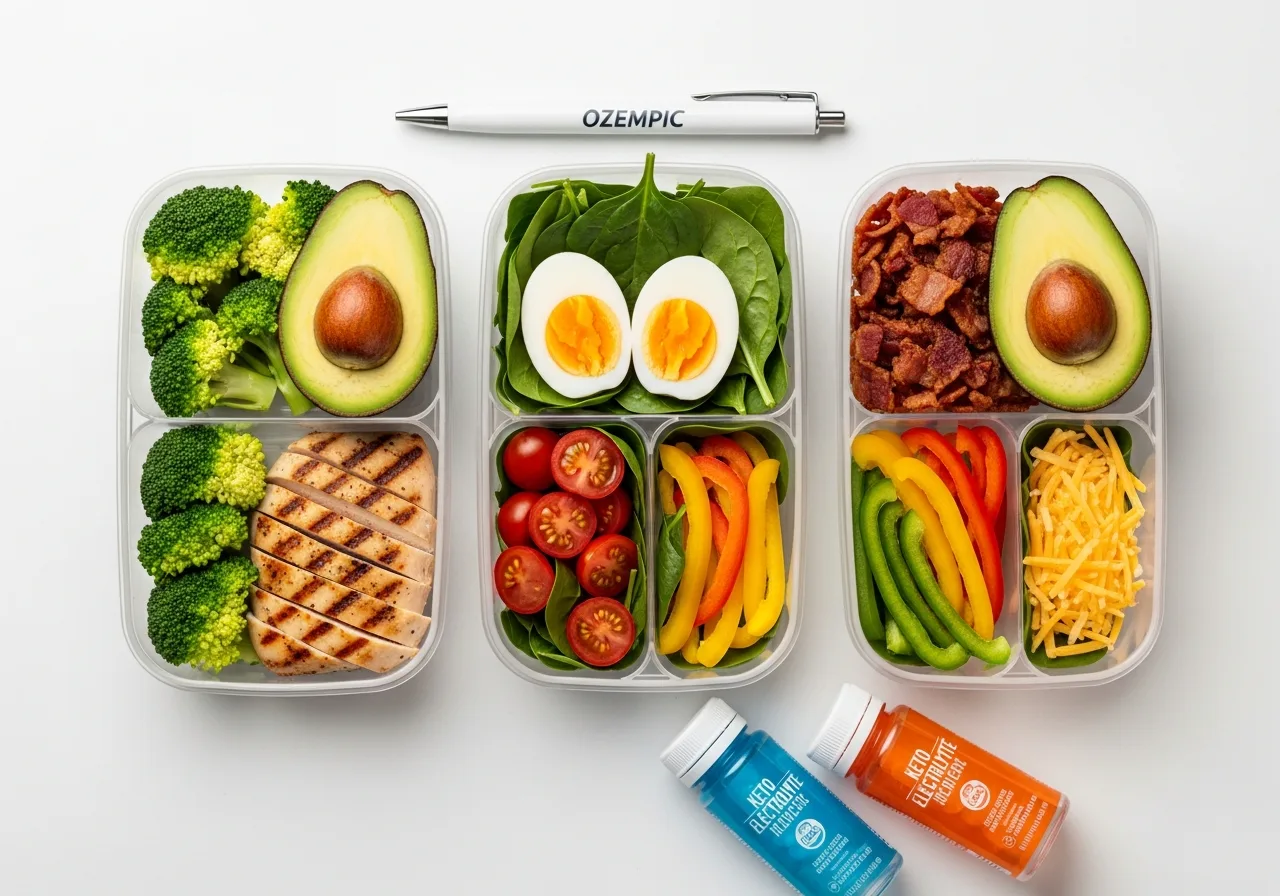
Getting Started: The Right Sequence
If you’ve decided to try this combination, here’s the sequence that works:
Step 1: Stabilize on Your GLP-1 First (4-6 Weeks)
Never start both at the same time. Your body needs time to adjust to the medication. Side effects are usually worst in the first few weeks and then improve. Wait until:
- Your dose is stable (you’ve finished titrating up)
- GI side effects are manageable
- You understand your new hunger patterns
Step 2: Gradually Reduce Carbs (2-3 Weeks)
Don’t go from a standard diet to strict keto overnight. Your system is already adapting to medication - don’t pile on additional stress.
Week 1: Drop to around 100g carbs per day
Week 2: Drop to around 50g carbs per day
Week 3: Drop to 20-30g carbs per day (ketosis territory)
This gradual approach minimizes the “keto flu” symptoms that can stack with medication side effects.
Step 3: Prioritize Protein From Day One
Before you worry about hitting perfect keto macros, focus on protein. Calculate your target (1.2-1.6g per kg body weight) and hit it every single day. Track it if you need to.
Our guide to understanding macros can help you calculate your specific targets.
Step 4: Manage Side Effects Proactively
You’ll likely experience some combination of:
- Nausea: Eat slowly, try ginger tea, avoid greasy foods initially
- Constipation: Increase fiber from non-starchy vegetables, drink more water
- Fatigue: This is often electrolytes - supplement sodium, potassium, and magnesium
Check out our keto flu remedies guide for specific solutions.
Step 5: Check In With Your Doctor
This isn’t a “set it and forget it” approach. You should have regular check-ins with your healthcare provider to:
- Monitor blood sugar (especially if diabetic)
- Check nutrient levels
- Adjust medications if needed
- Ensure you’re losing fat, not just muscle
Quick Tip
Track body composition, not just weight. The scale doesn’t tell you if you’re losing fat or muscle. Consider using body measurements, progress photos, or a body composition scale to get the full picture.
What About Different GLP-1 Medications?
The major GLP-1 medications work similarly, but there are some differences worth knowing:
Semaglutide (Ozempic, Wegovy): The most commonly prescribed. Weekly injection. Well-studied with keto-style diets.
Tirzepatide (Mounjaro, Zepbound): A newer dual-action medication (GLP-1 and GIP agonist). Often produces greater weight loss. Same general principles apply for combining with keto.
Liraglutide (Saxenda): Daily injection, generally less potent than weekly options. Same dietary considerations apply.
The combination approach works with any of these medications, but always clear it with the prescribing doctor who knows your specific situation.

The Muscle Preservation Protocol
Since muscle loss is the biggest concern with this combination, here’s how to protect yourself:
Protein Strategy
- Target: 1.2-1.6g protein per kg of goal body weight (not current weight)
- Timing: Distribute protein across all meals (don’t back-load at dinner)
- Quality: Prioritize complete proteins - eggs, fish, chicken, Greek yogurt, beef
- Supplements: Whey or plant protein shakes can help hit targets when appetite is low
Resistance Training
This is non-negotiable if you want to preserve muscle. You don’t need to become a bodybuilder, but you do need to:
- Train 2-3 times per week minimum
- Focus on compound movements - squats, deadlifts, presses, rows
- Progressive overload - gradually increase weight or reps over time
- Consistency over intensity - showing up matters more than crushing yourself
Even basic bodyweight exercises or resistance bands at home count. The stimulus of resistance training signals your body to preserve muscle tissue while losing fat.
Looking Ahead: Your Options
If you’re considering combining GLP-1s with keto, you essentially have three paths:
Path 1: Use Both Together Maximize results during the time you’re on medication. Requires careful attention to protein and side effect management.
Path 2: Use GLP-1s to Build Habits, Then Transition to Keto Many people use the appetite suppression period on GLP-1s to establish healthy eating patterns, then transition to keto as an exit strategy when they want to stop the medication.
Path 3: Choose One or the Other If the complexity feels like too much, picking one approach and doing it well is perfectly valid. Both work independently.
We’ll be exploring each of these paths in more detail in upcoming articles, including a complete guide to using keto as your GLP-1 exit strategy and a practical protocol for combining both approaches.
The Bottom Line
Can you do keto on Ozempic or other GLP-1 medications? Yes. Should you? That depends on your situation, your goals, and your willingness to do it properly.
The combination can be powerful - double appetite suppression, enhanced fat burning, better blood sugar control. But it requires:
- Medical supervision - this isn’t a DIY project
- Proper sequencing - stabilize on medication first, then gradually add keto
- Protein priority - hit your targets every day, no exceptions
- Resistance training - protect your muscle mass
- Patience - let your body adapt to each change before adding more
If you’re ready to explore this path, start by talking to your doctor. Come prepared with information about what you want to try and why. Most healthcare providers are open to dietary approaches that support medication effectiveness - they just want to ensure you’re doing it safely.
And if you’re new to keto entirely, start with our complete beginner’s guide to understand the fundamentals before adding any complexity.
Your body is capable of remarkable adaptation. Give it the right inputs - proper fuel, adequate protein, appropriate movement - and it will respond. Whether that’s with medication, diet, or both, the goal is the same: feeling better in a body that works for you.
GLP-1 + Keto Series
This article is part of our comprehensive series on combining GLP-1 medications with the ketogenic diet:
- How Incretin Hormones Control Hunger
- The Science of Medication-Assisted Weight Loss
- GLP-1 and Keto: Can They Work Together? (You are here)
- Keto First or GLP-1 First? A Decision Framework
- The Tradeoffs: What You Gain and Lose
- Combining GLP-1 and Keto: A Practical Protocol
- Using Keto as Your GLP-1 Exit Strategy
- 30-Day GLP-1 + Keto Quick Start
- GLP-1 vs GIP: Understanding the Science