Important Medical Disclaimer
We are not doctors or medical professionals. The information in this article represents our research, personal experience, and opinions based on available studies and clinical data.
Never start, stop, or modify any medication without consulting your healthcare provider. GLP-1 and GIP agonists are prescription medications with potential side effects and contraindications.
This content is for educational purposes only and should not replace professional medical advice, diagnosis, or treatment.
No more reading. It’s time to do.
This is your 30-day action plan for combining an incretin medication (tirzepatide or semaglutide) with the ketogenic diet. Every day, you’ll know exactly what to do. Print this out. Follow it. Check things off.
Let’s go.
Who This Plan Is For
This plan is designed for you if:
✅ You’re already on a stable GLP-1 dose (at least 4-6 weeks, ideally longer) ✅ Your doctor knows you’re planning to try low-carb eating ✅ You’re ready to commit to 30 days ✅ You can prep some meals in advance ✅ You’re willing to track your protein intake
Who Should Wait
❌ You just started GLP-1 medication (wait 4-6 weeks) ❌ You’re still having severe side effects from your medication ❌ You have type 1 diabetes (different protocol needed) ❌ Your doctor hasn’t cleared you for dietary changes
Your 30-Day Targets
Know these numbers before you start:
- Protein: ___g per day (calculate: goal weight in kg × 1.4)
- Carbs: Week 1-2: under 50g → Week 3-4: under 30g
- Water: 2+ liters per day
- Electrolytes: Sodium 3-5g, Potassium 1-3g, Magnesium 400mg
Before Day 1: Your Prep Checklist
Don’t skip this. One hour of prep prevents a week of chaos.
Clear the Kitchen
- Remove or hide high-carb temptations
- Clear a shelf for your keto foods
- Have a designated meal prep day (Sunday works well)
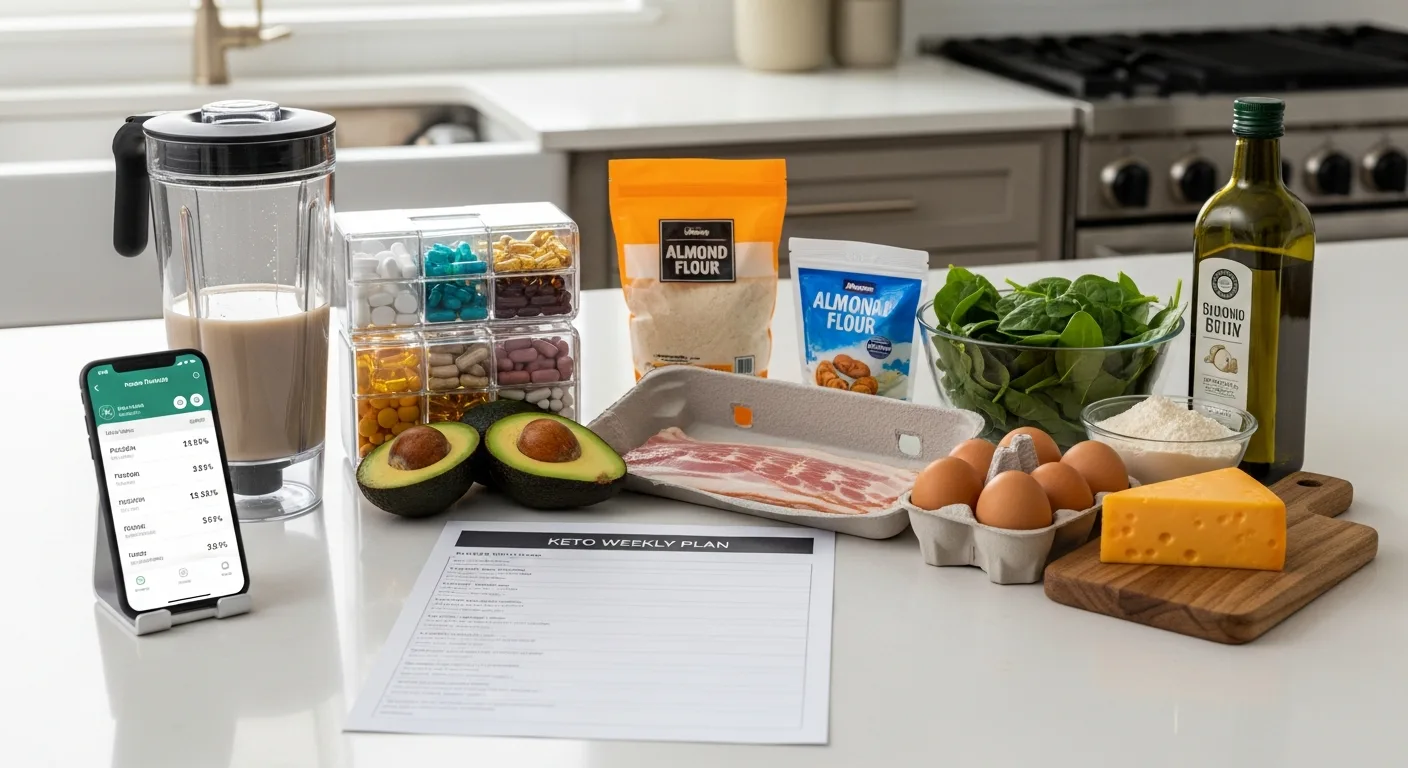
Stock the Essentials
Proteins:
- Eggs (2-3 dozen)
- Chicken thighs or breasts
- Ground beef
- Salmon or other fatty fish
- Bacon
- Greek yogurt (full fat, plain)
- Protein powder (whey or plant-based)
Fats:
- Butter
- Olive oil
- Avocados (4-6)
- Cheese (cheddar, parmesan, cream cheese)
- Nuts (almonds, walnuts, macadamias)
Vegetables:
- Spinach
- Broccoli
- Cauliflower
- Zucchini
- Bell peppers
- Lettuce or salad greens
Supplements:
- Electrolyte powder or tablets
- Magnesium (400-500mg)
- Salt (for adding to food and water)
Set Up Tracking
- Download a food tracking app (Carb Manager, Cronometer, or MyFitnessPal)
- Set your macros in the app
- Practice logging one day of what you currently eat
Calculate Your Protein Target
- Your goal weight in lbs: _____
- Divide by 2.2 = _____ kg
- Multiply by 1.4 = _____ grams protein per day
This number is your non-negotiable daily target.
Week 1: Foundation (Days 1-7)
Goal: Reduce carbs to under 50g/day, hit protein target every day.
This week is about transition, not perfection. You’re teaching your body a new way of eating.
Daily Checklist (Every Day This Week)
- Hit protein target: ___g
- Stay under 50g carbs
- Drink 2+ liters water
- Take electrolytes (morning and evening)
- Eat at least 2 servings of vegetables
- Take GLP-1 injection if scheduled day
Week 1 Sample Day
Morning (upon waking):
- Large glass of water with a pinch of salt
- Black coffee or tea (no sugar)
Breakfast (when ready):
- 3 eggs scrambled in butter
- 3 strips bacon
- ½ avocado
- Protein: ~28g
Lunch:
- 6 oz grilled chicken
- Large salad with olive oil and vinegar
- 1 oz cheese
- Protein: ~45g
Snack (if hungry):
- Protein shake
- Protein: ~25g
Dinner:
- 5 oz salmon
- Roasted broccoli with butter
- Side salad
- Protein: ~32g
Daily Total: ~130g protein, ~35g carbs
Week 1 Focus Areas
If you feel:
- Hungry: Eat more fat with your protein. Add butter, olive oil, cheese.
- Tired: Check water intake and electrolytes. Add salt to water.
- Headache: Almost always electrolytes. Try drinking broth.
- Constipated: Add more vegetables, drink more water, try magnesium before bed.
Don’t worry about:
- Perfect ketosis yet (that comes Week 3)
- Feeling perfect (adjustment is normal)
- The scale (water weight will fluctuate)
Week 1 Wins
Consider this week successful if you:
- Stayed under 50g carbs each day
- Hit your protein target most days
- Didn’t quit
- Learned what works for you
That’s it. Week 1 is about building the foundation.
Week 2: Transition (Days 8-14)
Goal: Reduce carbs to under 30g/day, manage transition symptoms.
This week you’ll enter ketosis. It might feel rough. That’s normal.
Daily Checklist (Every Day This Week)
- Hit protein target: ___g
- Stay under 30g carbs
- Drink 2.5+ liters water
- Take electrolytes 2-3 times daily
- Get 7+ hours sleep
- 15+ minute walk or light activity
Week 2 Sample Day
Morning:
- Water with electrolytes
- Black coffee with 1 tbsp butter or MCT oil (optional)
Breakfast:
- Cheese omelet (3 eggs, 2 oz cheese, spinach)
- 2 sausage links
- Protein: ~35g
Lunch:
- Bunless burger patty (6 oz)
- Cheese, lettuce, tomato, pickles
- Mayo or mustard
- Side of olives
- Protein: ~40g
Snack:
- Greek yogurt (plain, full fat)
- Handful of walnuts
- Protein: ~18g
Dinner:
- Grilled chicken thighs (6 oz)
- Cauliflower mash with butter
- Sautéed spinach in garlic butter
- Protein: ~40g
Daily Total: ~133g protein, ~22g carbs
Managing Keto Flu
This week is when “keto flu” hits for most people. Symptoms include:
- Fatigue
- Headaches
- Brain fog
- Irritability
- Muscle cramps
The solution is almost always electrolytes:
- Salt water: Add ¼ tsp salt to 16 oz water, drink throughout day
- Broth: Cup of chicken or beef broth 1-2x daily
- Magnesium: 400-500mg before bed
- Potassium: Half an avocado, spinach, or supplement
If symptoms are severe, go back to 50g carbs for a few days, then try again with aggressive electrolyte supplementation from the start.
Quick Tip
The 30-second electrolyte fix: Mix ¼ tsp salt + ¼ tsp “lite salt” (potassium) in 16 oz water with a squeeze of lemon. Drink this 2-3 times per day. Most keto flu symptoms disappear within an hour.
Week 3: Optimization (Days 15-21)
Goal: Maintain ketosis, fine-tune what works, build consistency.
The hard part is over. This week should feel better.
Daily Checklist (Every Day This Week)
- Hit protein target: ___g
- Stay under 30g carbs
- Drink 2+ liters water
- Continue electrolytes
- Do at least one meal you’ve mastered
- Note energy levels (should be improving)
Week 3 Focus: Finding Your Rhythm
By now you should:
- Know 3-5 breakfasts that work
- Know 3-5 lunches that work
- Know 3-5 dinners that work
- Have go-to snacks identified
- Know how to order at restaurants
If you don’t have these figured out, spend this week experimenting and documenting what works.
Week 3 Sample Day
Breakfast:
- Greek yogurt bowl
- Add protein powder (vanilla or unflavored)
- Sprinkle chia seeds and a few berries
- Protein: ~35g
Lunch:
- Salmon salad (canned salmon, mayo, celery)
- Served on lettuce leaves
- Hard-boiled egg on the side
- Protein: ~35g
Snack:
- Cheese sticks (2)
- Handful of almonds
- Protein: ~14g
Dinner:
- Steak (6 oz)
- Roasted asparagus with parmesan
- Caesar salad (no croutons)
- Protein: ~48g
Daily Total: ~132g protein, ~18g carbs
Signs You’re Fat-Adapted
Look for these positive changes:
- ✅ Stable energy throughout the day
- ✅ No mid-afternoon crash
- ✅ Can go 4-5 hours between meals without starving
- ✅ Less thinking about food
- ✅ Improved mental clarity
- ✅ Better sleep
If you’re not seeing these yet, give it another week. True fat adaptation takes 2-4 weeks for most people.
Week 4: Cruise Control (Days 22-30)
Goal: Establish sustainable patterns, plan what comes next.
This week is about proving this can be your lifestyle, not just a 30-day experiment.
Daily Checklist (Every Day This Week)
- Hit protein target: ___g
- Stay under 30g carbs
- Practice one challenging situation (restaurant, social event, etc.)
- Plan your post-30-day approach
- Take progress photos/measurements
Week 4 Focus: Testing Real Life
This week, intentionally practice:
- Eating out: Go to a restaurant and order keto
- Social eating: Attend an event where food is served
- Travel: If possible, take a day trip and stay keto
- Convenience: Have a day where you don’t meal prep - what do you do?
Document what works and what needs solutions.
Week 4 Sample Day
Breakfast:
- “Big breakfast” - eggs, bacon, sausage, avocado
- Protein: ~35g
Lunch (restaurant):
- Bunless burger or grilled protein
- Side salad instead of fries
- Extra vegetables
- Protein: ~40g
Dinner:
- Shrimp scampi (butter, garlic, wine sauce)
- Zucchini noodles
- Parmesan cheese
- Protein: ~30g
Evening snack:
- Protein shake or cheese
- Protein: ~25g
Daily Total: ~130g protein, ~20g carbs

Your Daily Success Checklist
Print this and check off each day:
| Day | Protein ✓ | Carbs Under 30g | Water 2L | Electrolytes | Notes |
|---|---|---|---|---|---|
| 1 | |||||
| 2 | |||||
| 3 | |||||
| 4 | |||||
| 5 | |||||
| 6 | |||||
| 7 | |||||
| 8 | |||||
| 9 | |||||
| 10 | |||||
| 11 | |||||
| 12 | |||||
| 13 | |||||
| 14 | |||||
| 15 | |||||
| 16 | |||||
| 17 | |||||
| 18 | |||||
| 19 | |||||
| 20 | |||||
| 21 | |||||
| 22 | |||||
| 23 | |||||
| 24 | |||||
| 25 | |||||
| 26 | |||||
| 27 | |||||
| 28 | |||||
| 29 | |||||
| 30 |
Shopping List: Week 1 Basics
Proteins (~$60-80):
- 2 dozen eggs
- 2 lbs chicken thighs
- 1 lb ground beef
- 1 lb bacon
- 1 lb salmon or other fish
- 32 oz Greek yogurt
- 1 container protein powder
Fats (~$25-35):
- 1 lb butter
- 1 bottle olive oil
- 4-6 avocados
- 8 oz cheddar cheese
- 8 oz cream cheese
- 1 bag almonds or mixed nuts
Vegetables (~$20-30):
- 2 bags spinach
- 2 heads broccoli
- 1 head cauliflower
- 3 zucchini
- 2 bell peppers
- 1 container salad greens
- 1 container cherry tomatoes
Supplements (~$20-40):
- Electrolyte powder or tablets
- Magnesium supplement
- Salt (if you don’t have)
Total Week 1: Approximately $125-185
This will likely last into Week 2 for many items.
Emergency Protein Sources
When you can barely eat but need protein:
| Source | Protein | Prep Time |
|---|---|---|
| Protein shake | 25-30g | 30 seconds |
| Greek yogurt cup | 15-20g | 0 (ready to eat) |
| String cheese (2) | 12g | 0 |
| Deli turkey (4 oz) | 18g | 0 |
| Hard-boiled eggs (2) | 12g | 0 (if pre-made) |
| Beef jerky (2 oz) | 18g | 0 |
| Cottage cheese (1 cup) | 28g | 0 |
Always have at least 2 of these ready to go in your fridge.
Troubleshooting the 30 Days
”I can’t hit my protein target”
Solutions:
- Add a protein shake daily
- Eat protein first at every meal
- Track protein mid-day - if low, add a shake in afternoon
- Increase portion sizes of meat/fish
- Add eggs or Greek yogurt as snacks
”I’m still hungry all the time”
Solutions:
- Add more fat to meals
- Eat slower
- Make sure you’re eating enough volume (vegetables fill you up)
- Check: are you actually hungry or just bored?
- Drink water first - thirst mimics hunger
”I’m not losing weight”
Check these:
- Are you truly under 30g carbs? Hidden carbs in sauces, dressings?
- Are you eating too much cheese/nuts? (calorie-dense)
- Are you tracking accurately?
- Give it time - water weight fluctuates; wait 2 weeks for trends
”I feel worse than before”
Usually electrolytes. Try:
- Drink salted broth right now
- Take magnesium
- Make sure you’re eating ENOUGH food
- If you’re bouncing in and out of ketosis (eating carbs sometimes), that causes misery - commit to consistency
What Happens After Day 30
You’ve built a foundation. Now you have choices:
Option 1: Continue Strict Keto Keep doing what you’re doing. It’s working. Don’t fix what isn’t broken.
Option 2: Find Your Carb Tolerance Gradually increase carbs (35g, then 40g, then 50g) and find where you can maintain without gaining.
Option 3: Plan Your Medication Taper If your goal is to eventually reduce or stop GLP-1s, read our exit strategy guide.
Option 4: Cycle Strict and Relaxed Some people do strict keto during the week and slightly relaxed on weekends. Find what works for your life.
You Made It
If you completed these 30 days:
- You’ve proven you can do this
- Your body is now fat-adapted
- You have the habits to continue
- You know what works and what doesn’t
This isn’t an ending - it’s a beginning. The skills you’ve built in 30 days can serve you for life.
Quick Reference Card
Print this and put it on your fridge:
Daily Non-Negotiables:
- ___g protein (FIRST priority)
- Under 30g carbs
- 2+ liters water
- Electrolytes (salt + potassium + magnesium)
When you feel bad, check:
- Did I drink enough water?
- Did I take electrolytes?
- Did I eat enough?
- Am I actually under 30g carbs?
Emergency snacks:
- Protein shake
- Greek yogurt
- Cheese sticks
- Hard-boiled eggs
- Deli meat
You’ve got this.
For the complete protocol with detailed week-by-week guidance, see our GLP-1 + Keto Protocol guide.
New to keto entirely? Start with our complete beginner’s guide to understand the fundamentals.
GLP-1 + Keto Series
This article is part of our comprehensive series on combining GLP-1 medications with the ketogenic diet:
- How Incretin Hormones Control Hunger
- The Science of Medication-Assisted Weight Loss
- GLP-1 and Keto: Can They Work Together?
- Keto First or GLP-1 First? A Decision Framework
- The Tradeoffs: What You Gain and Lose
- Combining GLP-1 and Keto: A Practical Protocol
- Using Keto as Your GLP-1 Exit Strategy
- 30-Day GLP-1 + Keto Quick Start (You are here)
- GLP-1 vs GIP: Understanding the Science